
.png)


A brief history lesson on how modern fences came to be and the pioneers who pushed the ideas of privacy and boundary.

Early Barriers
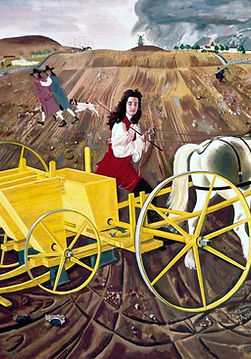
Fences have been around for thousands of years, long before they were about curb appeal or property lines—they were about survival. Early civilizations used whatever materials they had on hand: stacked stone walls in places like ancient Britain and Ireland, woven branches (called wattle fencing) across Europe, and mud or reed barriers in parts of the Middle East and Africa. One of the earliest large-scale examples is tied to Jethro Tull (not the band—the 18th-century English agricultural pioneer), who helped advance organized farming practices that made enclosing land with hedges and fences more systematic. Around the same time, England’s Enclosure Movement transformed open land into privately fenced property, setting the foundation for how we think about fencing today.
The Invention of Barbed-Wire
In early America, fencing evolved out of necessity and available resources. Settlers built split-rail fences—those zig-zag wooden fences you still see today—because they required no nails and could be assembled quickly from timber. As expansion continued west, fencing hit a major turning point with the invention of barbed wire in 1874 by Joseph Glidden. His design made it affordable and practical to fence large areas of land, especially across the plains where wood was scarce. That single innovation reshaped agriculture, property ownership, and even settlement patterns across the United States.
.png)
Looking Ahead
Today, fencing has come a long way from hand-stacked stone and rough-cut timber. Modern fences are engineered for durability, consistency, and style—whether it’s pressure-treated wood, low-maintenance vinyl, or powder-coated steel and aluminum systems. While the tools and materials have evolved, the core purpose hasn’t changed: defining space, protecting what matters, and adding structure to the land. The difference now is precision—what used to take days of hand labor can now be done with augers, concrete-set posts, and materials built to withstand decades of weather, especially in places like Sioux Falls where durability actually matters.

